

The Strait of Hormuz Enters a Phase of Coercion Where One Shot Matters More Than a Statement
Attacks on ships, Tehran’s abrupt reversals, and the persistence of the U.S. blockade show that the world’s main energy corridor is no longer functioning as a trade route, but as a lever of pressure with consequences for oil, insurance, and high diplomacy.




The Strait of Hormuz is once again ceasing to be merely a narrow sea passage between Iran and the Arabian Peninsula. It is becoming, ever more visibly, a political mechanism of pressure, where control over tanker traffic serves as a direct extension of war by other means. After new reports of ships coming under fire, it became clear that the brief window of hope for de-escalation was not a transition to stability, but only a pause between two phases of coercion.
The current tension did not emerge from a single incident. It grew out of a clash between two incompatible logics. Tehran insists that an open strait means little if the American blockade of Iranian ports remains in place. Washington, by contrast, wants to preserve that blockade as its main negotiating lever and is unwilling to release pressure before a broader political arrangement is secured. That is why Iran’s decision to place the strait back under “strict control” was not an emotional reaction, but a predictable attempt to restore symmetry to the bargaining process.
What makes this especially dangerous is that markets and fleets do not live by diplomatic wording. They live by the reality of passage. Even in crisis, the strait was not entirely frozen. Traffic still moved through it, but in a nervous, conditional, interrupted way. That kind of half-open state is the most dangerous of all, because it creates the illusion of continuity where the rules of safety have already stopped being stable. As Daycom noted in earlier analysis, what matters to the energy market is not only whether Hormuz is physically open, but whether the force controlling it behaves in a predictable way.
And predictability is precisely what is collapsing fastest. On Friday the strait was described as open. By Saturday, the Islamic Revolutionary Guards Corps had effectively returned it to a regime of hard-power supervision. Soon after came reports of gunfire and vessels turning back. For shipowners, insurers, and commodity traders, that sequence means one simple thing: the legal status of the route no longer guarantees its operational safety.
That is why the incidents involving two ships extend far beyond the level of an isolated maritime episode. A British naval monitoring service received a report that one tanker had come under fire from two Iranian gunboats, while a container ship reported being struck by an unknown projectile. India then summoned the Iranian ambassador over what it called a serious incident involving two Indian-flagged ships. Once the passage zone begins to generate not only military statements but diplomatic protests from major energy-importing states, the crisis automatically rises to the level of the wider international economy.
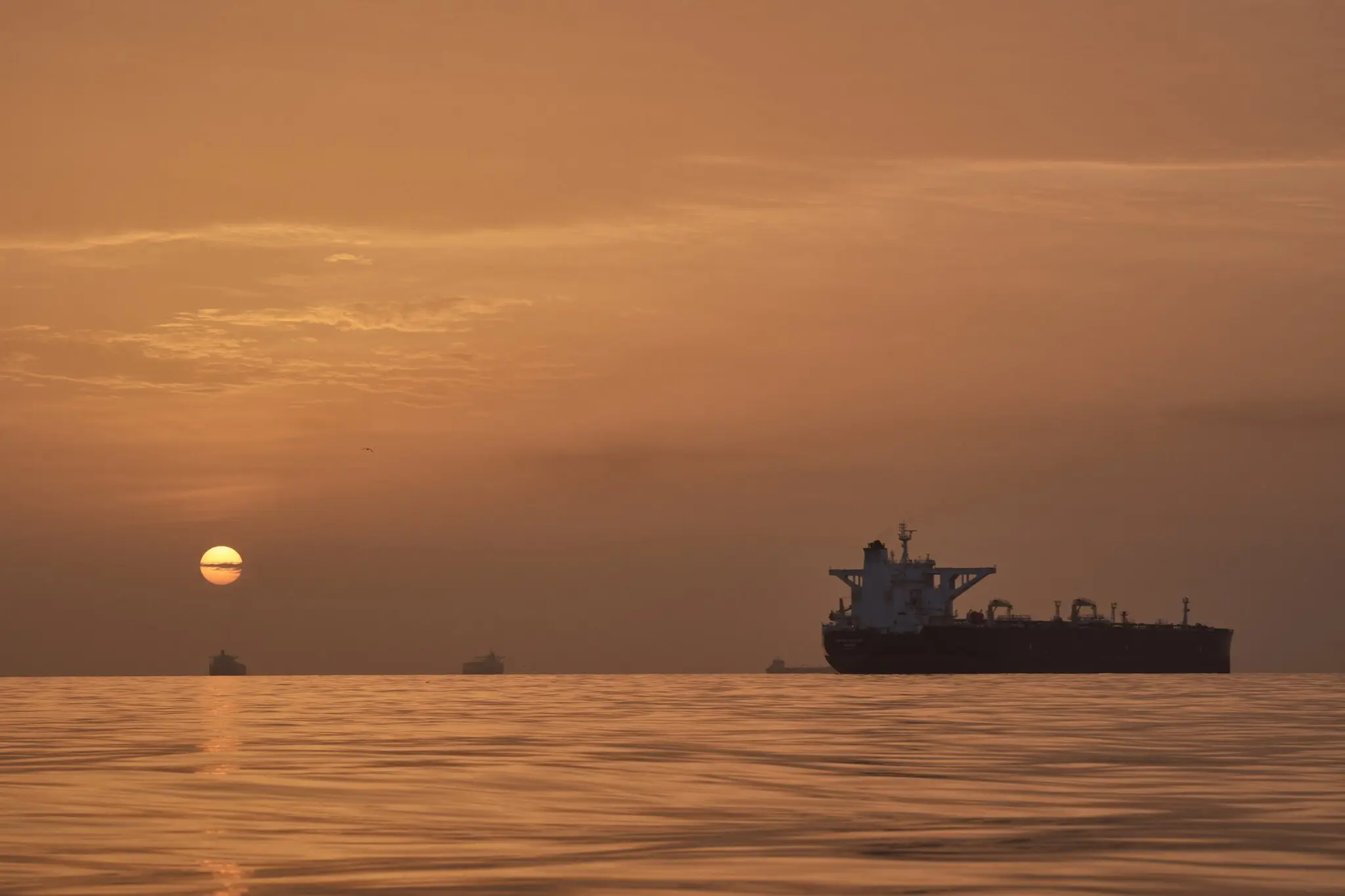
India’s reaction is especially revealing. For New Delhi, the Strait of Hormuz is not an abstract geopolitical symbol, but a critical artery for crude imports, petroleum flows, and broader energy stability. If Indian-flagged vessels are forced to turn around or come under fire, that means even countries seeking pragmatic relations with all sides can no longer assume that commercial shipping will remain outside direct coercive pressure. The risk immediately moves from the military sphere into the commercial, insurance, and diplomatic spheres at once.
Iran, in effect, is trying to make one argument unmistakably clear: there can be no truly “free” global transit if Iran itself is denied normal maritime access to external trade. This is a strategy of linkage. Tehran is tying the fate of the strait not only to the war itself, but to sanctions, the blockade of its ports, nuclear diplomacy, and a wider political package being discussed through intermediaries. In that sense, the sea and diplomacy no longer operate on separate tracks. They are now fused into one pressure mechanism.
That is the real novelty of this moment. In earlier phases, blockades, escorts, and inspections could still be interpreted as signals of power that did not necessarily lead to gunfire. Now the line between control and direct armed incident has almost disappeared. For the market, that means a new risk structure: prices must now reflect not only delays or reduced supply, but the possibility of rapid escalation caused by one captain’s mistake, one nervous maneuver, or one overly aggressive interpretation of what “permitted passage” means.
The consequences for oil go well beyond the immediate reaction of futures markets to headlines. Hormuz is not just a symbol. It is the central artery through which a vast share of the world’s oil moves. Every new incident therefore hits several layers of the system at once: physical transit, insurance premiums, loading schedules, freight costs, crew readiness, and the willingness of operators to expose vessels in a zone where a warning can quickly become live fire.
And yet the paradox of this crisis is that the diplomatic window is not formally closed. The pause in Lebanon, new proposals moving through Pakistan, and Donald Trump’s guarded optimism all create the appearance of movement toward some kind of compromise. But that is exactly what makes the situation so fragile. When political language points toward a future truce while the sea operates by the logic of immediate force, a single incident can move faster than diplomacy and break the rhythm of negotiations altogether.
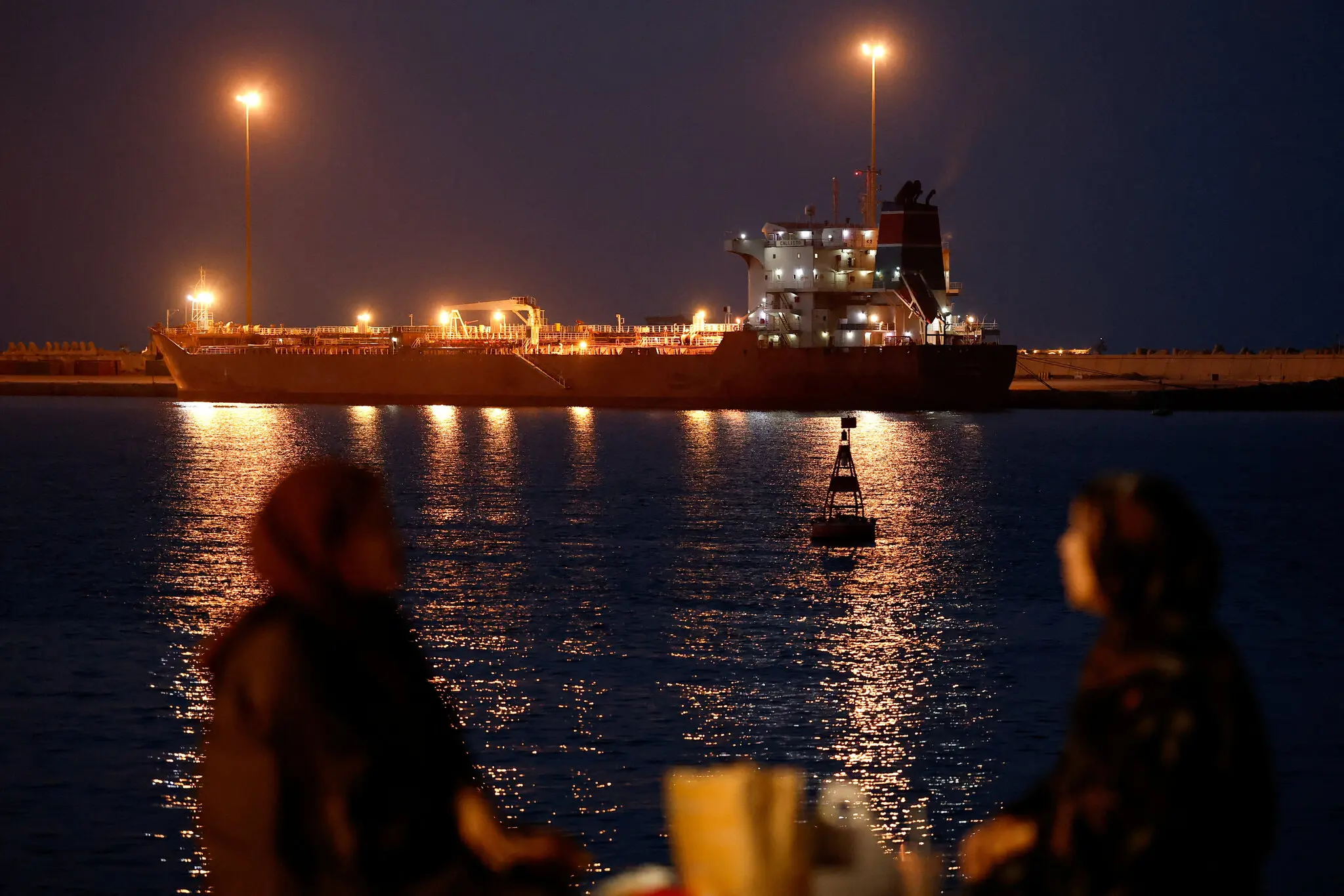
For the United States, the problem is not limited to Iran alone. By maintaining the blockade, Washington signals consistency and pressure, but it also assumes part of the responsibility for a situation in which the strait cannot return to a predictable operating regime. The longer this formula of an “open Hormuz without normal Iranian exports” remains in place, the more likely it becomes that Tehran will continue answering not in the negotiating room, but on the water. In that environment, every commercial voyage becomes less a logistical act than a test of each side’s tolerance.
The current crisis in the Strait of Hormuz is no longer a story about whether the passage is simply “open” or “closed.” It is a story about how the world’s most important energy corridor is entering a regime of conditional passage under armed oversight, where any political declaration can be cancelled by the next order, the next maneuver, or the next shot. In such a state, the strait stops being merely a transport artery and becomes an instrument of political coercion. The true sign of de-escalation will not be another official statement. It will be the moment when commercial fleets move through Hormuz again without fearing that the next signal will be not a radio call, but gunfire.
Тетяна Мілетіч — Кореспондент, який спеціалізується на суспільно важливих темах, пише про міжнародну політику, фінансові ринки та фокусується на Близькому Сході. Вона проживає та працює в Тель-Авіві, Ізраїль.
Сергій Тітов — Кореспондент, який спеціалізується на політиці, економіці та культурі Близького Сходу, пише про суспільно важливі теми. Він проживає та працює в Тель-Авіві (Ізраїль).
Іван Дехтярь — Кореспондент, який працює в Європі та Центральної Азії, пише щоденні новини та працює над масштабними розслідувальними проєктами і сюжетами. Базується в Стамбул, Туреччина.
Інна Брах — Кореспондент, яка спеціалізується на суспільно важливих темах, пише про міжнародну політику, фінансові ринки та фокусується на Європі та Близькому Сході. Вона проживає та працює в Стокгольмі, Швеція.
This material is part of the in-depth topic: США та Ізраїль проти Ірану, which covers many important aspects of this story. The Daycom Post closely follows developments, verifying sources and information to provide our readers with the most accurate and up-to-date coverage.
Цей матеріал опубліковано 19.04.2026, 04:50 GMT+3 Kyiv; 21:50 GMT-4 Washington, розділ: Близький схід, із заголовком: "The Strait of Hormuz Enters a Phase of Coercion Where One Shot Matters More Than a Statement". Якщо в публікації з'являться зміни, про це буде зазначено та описано у кінці публікації.
Читайте щоденну газету та загальну стрічку новин газети Дейком.
Новини, які можуть Вас зацікавити:
Штатні та позаштатні журналісти газети «Дейком» щодня готують сотні публікацій, щоб читачі отримували найоперативнішу, перевірену й глибоку інформацію. Ми працюємо для тих, хто хоче розуміти суть подій, бачити широку картину та бути на крок попереду.