


Kremlin backs Trump’s call to halt strikes on Russian refineries as diesel shortage deepens



Strikes on Russian refineries have become a new point of tension between Kyiv and Washington. Donald Trump urged Volodymyr Zelenskyy to stop targeting diesel-producing facilities, citing damage to the global market. The Kremlin welcomed the appeal, while blaming the wider energy crisis mainly on turmoil in the Persian Gulf.
The Kremlin welcomed U.S. President Donald Trump’s call for Ukraine to stop striking Russian facilities linked to diesel production. Vladimir Putin’s spokesman Dmitry Peskov said Moscow viewed positively any demand to halt attacks on what it describes as civilian economic infrastructure.
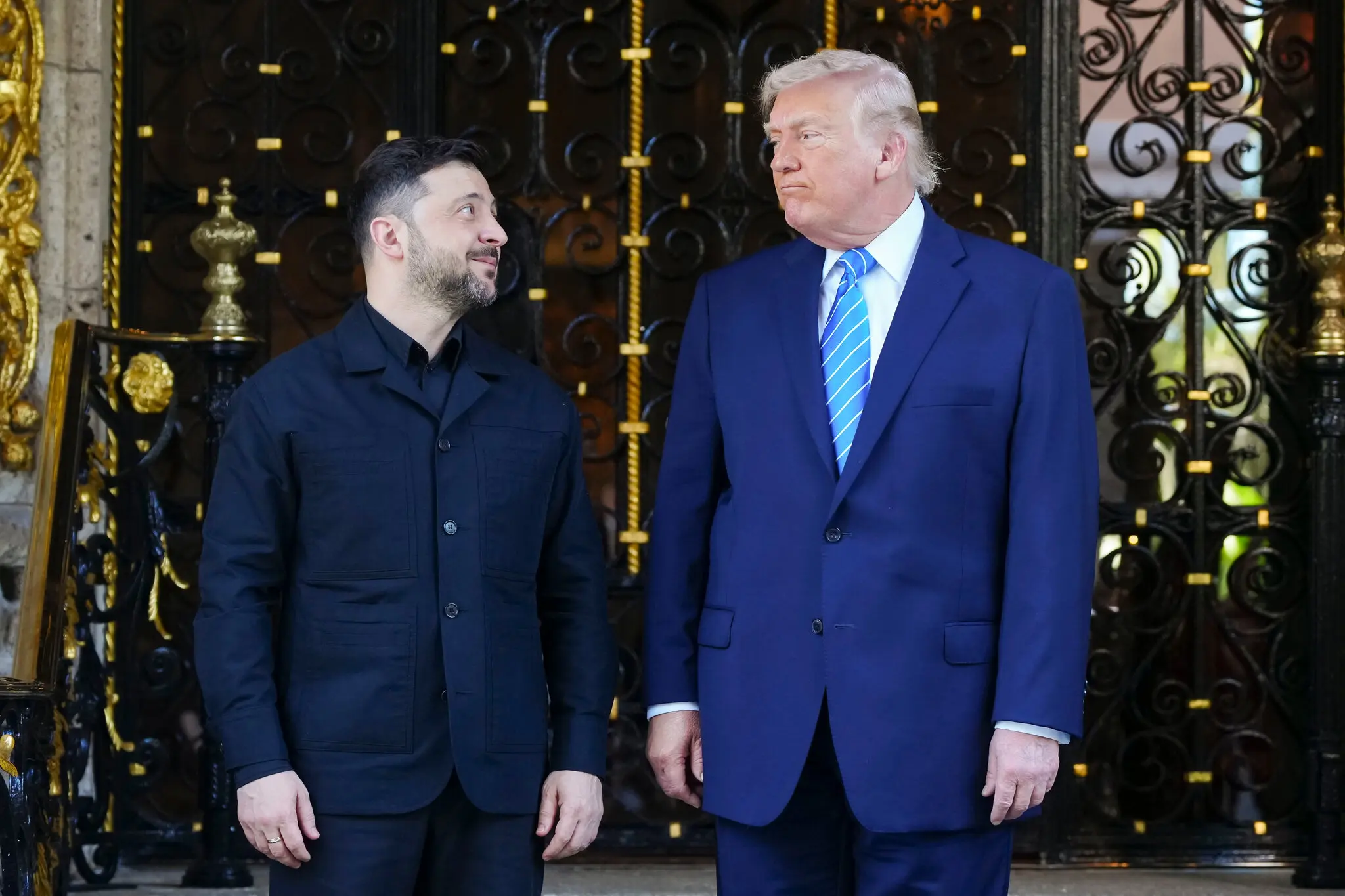
Trump said a day earlier that he had already discussed the issue with Volodymyr Zelenskyy. He argued that Ukraine could choose other Russian targets but should avoid disabling diesel production because such attacks were worsening global fuel shortages and hurting the world economy.
The demand came after months of intensified Ukrainian strikes on Russian oil refineries and fuel infrastructure. The attacks have reduced petroleum-product output, contributed to gasoline shortages in several Russian regions and forced Moscow to intervene more heavily in its domestic fuel market.
Daycom’s preliminary analysis of open and verified data highlights the central contradiction in the debate: Trump is linking the global diesel shortage primarily to Ukrainian strikes, while the Kremlin itself acknowledges that broader energy instability is being driven mainly by war and supply disruption around the Persian Gulf.
For Ukraine, Russian refineries have long been part of its military strategy. Kyiv views the fuel sector as both a source of resources for the Russian armed forces and a source of state revenue financing the invasion. The strikes are intended to restrict military supply, raise Moscow’s costs and transfer part of the war’s economic burden onto Russian territory.
The effects have already spread beyond individual plants. Several Russian regions have reported gasoline shortages, supply disruptions and administrative measures designed to stabilize the market. Russia’s own energy forecasts have also been revised lower as refinery damage and more difficult logistics weigh on output.
The global diesel shortage, however, has much broader causes. The U.S.-Iran war, disruption at Middle Eastern refining facilities and restrictions on shipping through the Strait of Hormuz have sharply reduced fuel availability. Industry estimates point to the loss of millions of barrels a day of diesel supply from Russia and the Persian Gulf region combined.
Peskov himself effectively separated Russia’s domestic problems from the global picture on Monday. He supported Trump’s request to Kyiv but simultaneously said deteriorating conditions in world energy markets were primarily the result of instability and renewed escalation in the Persian Gulf.
That distinction matters because diesel markets depend on more than the total amount of crude oil being produced. The critical issue is how much refinery capacity can turn crude into usable fuel and then deliver it to consumers. Refining and logistics have become two of the most vulnerable links in the current energy crisis.
For the United States, the problem already carries domestic political weight. Diesel prices have risen sharply, and the fuel is essential to trucking, agriculture and industry. Sustained increases quickly feed into the cost of freight, food and consumer goods, intensifying inflationary pressure ahead of the midterm elections.
For Moscow, the domestic shortage has also arrived at a politically awkward moment. Voting in the State Duma election is scheduled over three days, September 18, 19 and 20. Fuel problems, drone attacks and the growing visibility of the war far from the front create an uncomfortable backdrop for a campaign the Kremlin wants to frame around stability.
Russian authorities are already using export restrictions to keep more fuel inside the country. Since August 1, Moscow has imposed temporary limits on exports of gasoline, diesel, marine fuel and gasoil through the end of January 2027, although an exemption for direct diesel producers has applied since September.
Peskov said those measures should help supply the domestic market. But they also expose the limits of the official argument that Ukrainian strikes have had only a marginal effect. If production and distribution were functioning normally, the need to restrict exports in order to protect domestic supply would be considerably smaller.
For Kyiv, the U.S. appeal creates a strategic dilemma. Strikes on refineries are among the few tools Ukraine possesses to exert systematic pressure on the Russian economy far from the front. Abandoning them would mean giving up part of the pressure on a sector directly tied to financing and sustaining the war.
Washington, however, is viewing the problem on a different scale. If reduced Russian exports coincide with a Middle Eastern energy crisis, the consequences are felt not only in Moscow and Kyiv but by American consumers as well. That turns Ukraine’s choice of targets from a purely military question into an issue of U.S. domestic economic policy.
The debate also contains an obvious asymmetry. Russia has intensified its own attacks on Ukrainian businesses, logistics, ports, fuel facilities and critical infrastructure in recent weeks. Moscow says it is targeting military-related sites, while Kyiv describes the campaign as a systematic effort to destroy the economic foundations of the Ukrainian state.
That is why a demand aimed only at Ukrainian strikes on the fuel sector inevitably raises the issue of reciprocity. If energy infrastructure should be protected because of its global economic consequences, Kyiv can argue that equivalent restrictions should apply to Russian attacks on Ukrainian power facilities, ports and industrial sites.
So far, there is no public evidence of such a reciprocal arrangement. Trump spoke specifically about Ukrainian strikes on Russian diesel production, and the Kremlin quickly used his remarks to reinforce its own position. Washington has not announced a formal agreement on prohibited targets or any monitoring mechanism for an energy ceasefire.
The situation is further complicated by the fact that the global fuel crisis has no single source. Ukrainian strikes are reducing Russian refining capacity, but the war around the Persian Gulf is simultaneously disrupting oil and petroleum-product flows on a much larger scale. International energy officials are already warning of a deepening global supply deficit.
For the Kremlin, Trump’s appeal is diplomatically useful regardless of how much of the global shortage can actually be attributed to Ukraine. Moscow can now portray its refineries as facilities whose destruction harms not only Russia but the wider world economy while continuing its own military campaign against Ukrainian infrastructure.
For Ukraine, the issue now extends beyond the choice of its next target. If Washington begins tying military support or negotiations to limits on strikes against Russian energy infrastructure, Kyiv will have to balance the operational value of those attacks against relations with its most important partner. That political cost may ultimately matter more than damage to any single refinery.
Кирил Нечай — Міжнародний кореспондент, який працює в Росії, Україні, Білорусі, країнах Кавказу та Центральної Азії. Працює над щоденними новинами та більш масштабними розслідувальними проектами та сюжетами. Базується в Москві.
Сергій Тростянець — Міжнародний кореспондент, який пише про Росію, Східну Європу, Кавказ і Центральну Азію.
Сименич Вікторія — Кореспонден, який спеціалізується на міжнародній політиці, економіці, науці, технологіях. Вона є дипломатичним кореспондентом в Торонто, Канада.
This material is part of the in-depth topic: Aid to Ukraine, which covers many important aspects of this story. The Daycom Post closely follows developments, verifying sources and information to provide our readers with the most accurate and up-to-date coverage.
Цей матеріал опубліковано 14.09.2026, 16:15 GMT+3 Kyiv; 09:15 GMT-4 Washington, розділ: Світові новини, Сполучені Штати, Суспільство, Політика, Азія, із заголовком: "Kremlin backs Trump’s call to halt strikes on Russian refineries as diesel shortage deepens". Якщо в публікації з'являться зміни, про це буде зазначено та описано у кінці публікації.
Більше новин у головній стрічці газети
Новини, які можуть Вас зацікавити:
Штатні та позаштатні журналісти газети «Дейком» щодня готують сотні публікацій, щоб читачі отримували найоперативнішу, перевірену й глибоку інформацію. Ми працюємо для тих, хто хоче розуміти суть подій, бачити широку картину та бути на крок попереду.